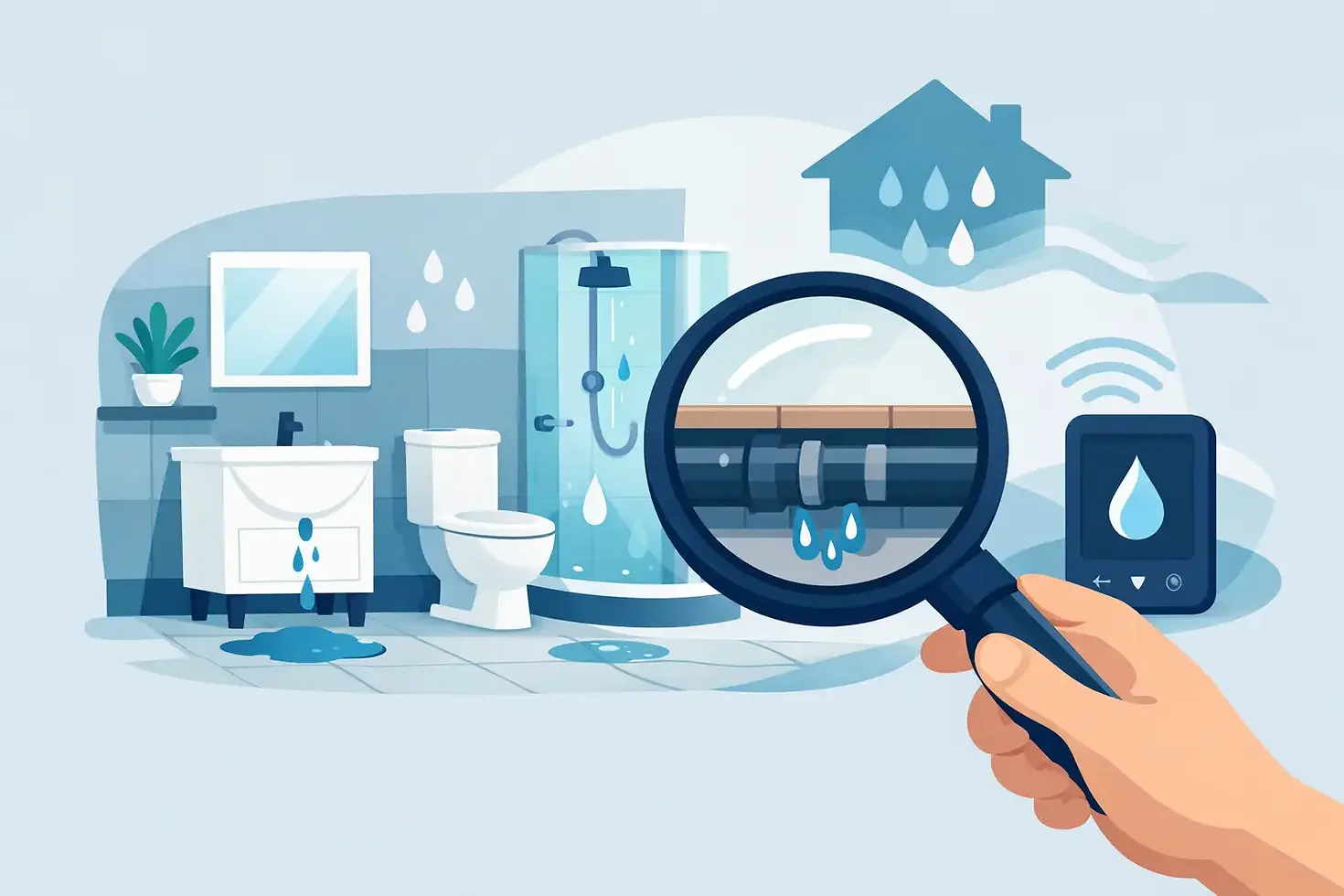
Guide to Bathroom Leakage Detection
- Waterproofing Specialist

- Apr 27
- 6 min read
A bathroom leak rarely starts with a dramatic drip. More often, it shows up as peeling paint on the ceiling below, a musty smell that will not go away, or grout that always looks dark no matter how long the room has been dry. That is why a proper guide to bathroom leakage detection matters. Catching the real source early can save you from structural damage, mold growth, repeated repair bills, and the frustration of fixing the wrong thing.
If you have already tried resealing a joint or replacing a fitting and the problem keeps coming back, the issue is usually not the visible symptom. Bathroom leaks travel. Water can move under tiles, through slab joints, around pipe penetrations, and into walls before it appears somewhere else. Good detection is not guesswork. It is a process.
Why bathroom leaks are so often misdiagnosed
Bathrooms are compact spaces with several leak points packed together. A failed shower waterproofing membrane can look like a plumbing leak. A cracked toilet seal can mimic a floor trap issue. Condensation can even be mistaken for active seepage. That is why temporary patch jobs fail so often.
The trade-off is simple. A fast cosmetic repair may look cheaper at first, but if it misses the root cause, it usually leads to a second repair, damaged finishes, and wider moisture spread. A specialist inspection costs more upfront than guesswork, but it is the route that protects the property.
Guide to bathroom leakage detection: what to check first
Start with the pattern, not the panic. The timing and location of the leak tell you a lot.
If the leak appears only when someone showers, the shower enclosure, tile joints, drain connection, or waterproofing layer are likely suspects. If water shows up even when the bathroom is not in use, a pressurized plumbing line may be involved. If the ceiling below becomes damp after toilet flushing, the toilet pan collar or waste connection deserves close attention.
Look carefully at the visible signs inside the bathroom. Loose or hollow-sounding tiles, cracked grout lines, swollen skirting, stained silicone, bubbling paint on adjacent walls, and persistent damp smells all point to water escaping where it should not. On the floor below or in the room next door, yellow-brown ceiling stains, peeling paint, or soft drywall often reveal where the water is finally surfacing, not where it started.
That distinction matters. The visible stain is the endpoint. The source may be several feet away.
The most common bathroom leak sources
In most residential bathrooms, leaks come from one of five areas.
The first is failed shower waterproofing. This is especially common in older bathrooms or in spaces where grout and tiles were treated as if they were the waterproof barrier. They are not. Tiles shed water, but the real protection should be beneath them.
The second is plumbing connections. Mixer valves, shower arms, basin traps, supply lines, and concealed pipe joints can all leak slowly. These leaks are easy to miss at first because they may stay hidden inside walls or vanities.
The third is toilet leakage. A worn wax ring or pan seal can let water escape during flushing. Hairline cracks in the toilet bowl or cistern can also cause intermittent leaks.
The fourth is floor waste and drain failure. If the drain body is not properly sealed or has shifted over time, shower water can seep into the slab or underfloor cavity.
The fifth is failed sealants and movement joints. Silicone around shower screens, tubs, and wall intersections does not last forever. Once it shrinks, separates, or grows mold, water finds a path.
How to inspect a bathroom leak without making it worse
A careful visual inspection is useful. Aggressive DIY testing is not always wise.
Begin by drying the bathroom thoroughly. Then use each fixture one at a time. Run the sink and check the trap and supply lines. Flush the toilet and inspect around the base. Run the shower while watching corners, screen edges, and adjacent rooms. If possible, have one person use the bathroom while another monitors the ceiling below or the wall on the opposite side.
Pay attention to whether the leak appears immediately or after several minutes. Immediate leakage often points to direct plumbing or drain failure. Delayed moisture can suggest saturation through tile joints, failed membranes, or poor falls that let water pool where it should drain away.
What you should not do is start removing tiles, opening walls, or covering everything in fresh silicone before diagnosis. Those steps can hide evidence, spread damage, and make professional assessment harder.
When the problem is not the bathroom alone
Not every bathroom leak is caused by the bathroom itself. This is where many homeowners and landlords lose time.
If the affected wall is external, wind-driven rain from facade cracks can mimic an internal leak. If the bathroom sits below a balcony or roof edge, water may be entering from above and traveling down. In apartments and multi-level homes, the leak may come from a neighboring unit, shared pipework, or a slab penetration outside the bathroom footprint.
This is why inspection-led waterproofing matters. Real detection looks at the whole water path, not just the nearest wet spot.
Guide to bathroom leakage detection: when to call a specialist
You should call a waterproofing specialist when the leak is recurring, the source is unclear, or previous repairs have failed. Those three situations usually mean the issue is deeper than surface sealant.
A specialist can separate plumbing defects from waterproofing failure, assess whether water is traveling from another building element, and recommend the right repair system instead of a generic fix. That matters because the correct solution depends on the cause. A drain connection issue needs a different approach than failed shower membrane, and both are different from facade seepage.
For homeowners and property managers, the real value is certainty. Fast diagnosis reduces disruption. Accurate scope prevents over-repair. And a repair backed by warranty lowers the risk of paying twice for the same problem.
What professional bathroom leakage detection should include
A proper inspection should be methodical, not rushed. The goal is to identify the root cause, the water path, and the repair area with enough confidence to stop the leak permanently.
That usually includes a visual assessment of the bathroom and adjacent rooms, moisture pattern evaluation, inspection of plumbing fixtures and penetrations, and a review of the building elements around the leak zone. In some cases, photos from the affected areas can help speed up the first stage of diagnosis and narrow the likely causes before a site visit.
This is where a specialist contractor stands apart from a general handyman. The focus is not just on making the stain disappear. It is on stopping water intrusion at its source and selecting a system designed to last. At Invisisealworks, that means inspection-led repair with specialist waterproofing methods, advanced nano waterproofing technology where suitable, and a clear 3-year waterproof warranty for added confidence.
How to reduce damage while you wait for inspection
If the leak is active, keep water exposure to a minimum. Stop using the affected shower or fixture if you can identify it. Wipe standing water, ventilate the space, and move items away from damp walls or ceilings. If a ceiling below is bulging, do not ignore it. Waterlogged drywall can fail.
Take clear photos of the bathroom, the damaged area, and any staining patterns. Include wide shots and close-ups. This helps with faster remote triage and gives the specialist a better starting point for the inspection.
Avoid repainting stains, regrouting everything, or repeatedly resealing joints before the source is confirmed. Cosmetic work can wait. Diagnosis should come first.
The cost of waiting too long
A small bathroom leak can stay small for a while. Then it spreads. Timber swells, paint lifts, mold risk increases, and repair scope grows from one area to several. For landlords and property managers, delays also increase tenant complaints and vacancy risk. For homeowners, the bigger issue is often hidden damage behind finished surfaces.
Early detection is not about overreacting. It is about protecting the parts of the home you cannot easily see.
The right move is not to keep patching symptoms and hoping the last repair holds. If your bathroom is showing signs of seepage, recurring dampness, or unexplained ceiling stains, treat it like a source problem until proven otherwise. A fast, specialist diagnosis gives you the best chance of stopping the leak once, protecting the property, and moving on with confidence.


Comments