Nano Waterproofing vs Membrane Waterproofing
- Waterproofing Specialist

- May 13
- 6 min read
A ceiling stain rarely starts where you can see it. By the time paint bubbles, plaster softens, or a wall starts smelling damp, water has already found a path through weak points in the building envelope. That is why the question of nano waterproofing vs membrane waterproofing matters so much. The right system can stop a leak at the source. The wrong one can leave you paying twice.
For homeowners, landlords, and property managers, this is not a chemistry debate. It is a decision about durability, disruption, and whether the next heavy rain brings peace of mind or another callback. Both waterproofing methods have real value. But they do not perform the same way in every location, and they should never be treated as interchangeable.
Nano waterproofing vs membrane waterproofing: what is the difference?
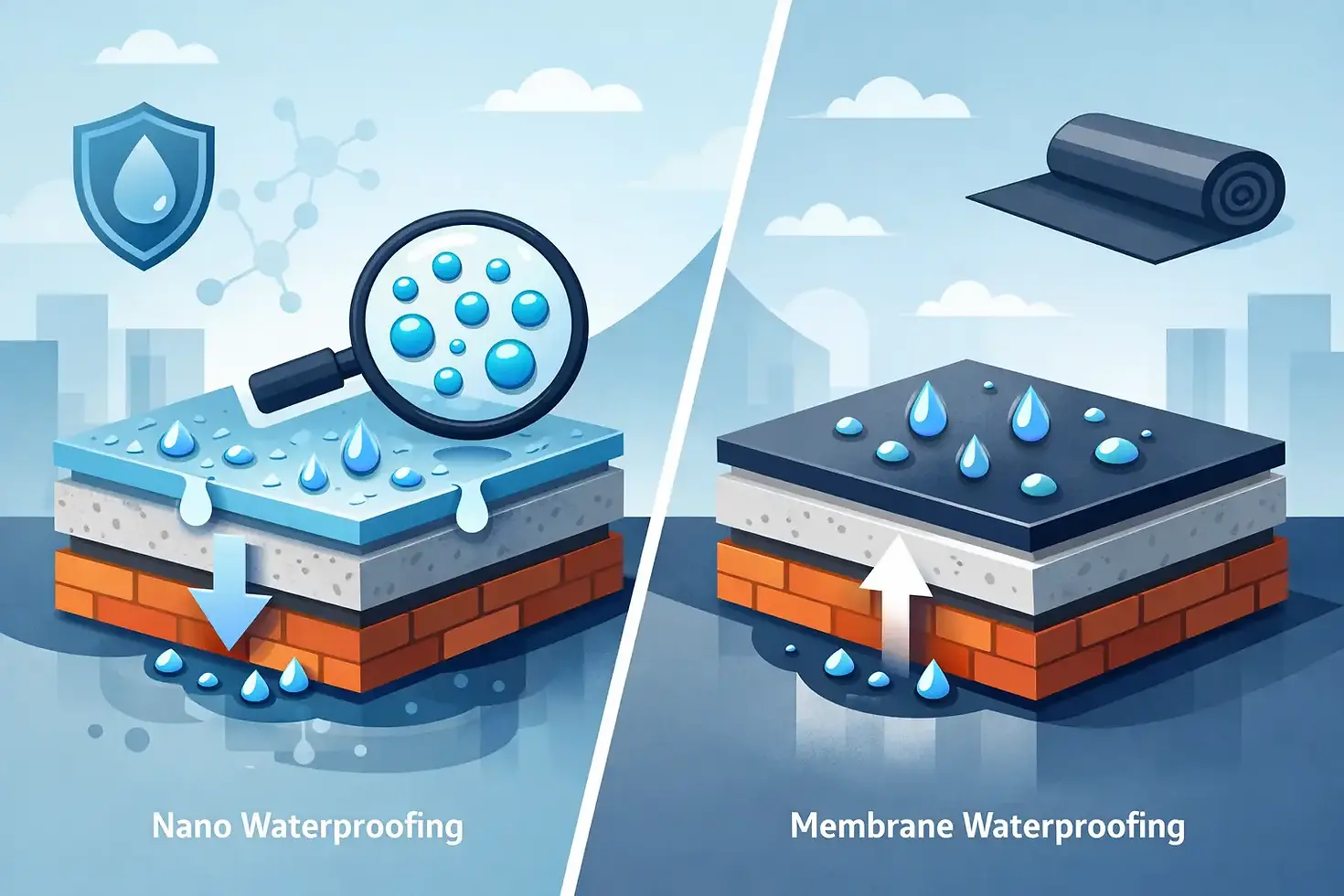
The simplest distinction is this: membrane waterproofing creates a physical barrier over a surface, while nano waterproofing works by penetrating the substrate and reducing water absorption at a microscopic level.
Membrane systems are usually applied as sheets or liquid coatings that cure into a continuous layer. Their job is straightforward - block water before it passes through the surface. These systems are widely used on roofs, bathrooms, balconies, planter boxes, and areas with sustained water exposure.
Nano waterproofing is different. Instead of sitting mainly on top of the surface, advanced nano treatments penetrate pores, capillaries, and hairline pathways within concrete, mortar, grout, or masonry. This can help repel water without creating the same kind of thick external skin. In the right application, that means less invasive work, less demolition, and strong protection without significantly changing the surface profile.
The key phrase is in the right application. Waterproofing fails when the system does not match the leak mechanism.
Where membrane waterproofing is usually the stronger choice
Membrane systems remain the standard in many high-risk wet areas because they provide a dedicated waterproof layer. If a bathroom floor is being rebuilt, if a flat roof is exposed to standing water, or if a balcony screed has failed, a properly specified membrane is often the right answer.
That is because these areas deal with concentrated water load. Showers, roof ponds, drainage failures, and external decks are not just dealing with occasional moisture. They are dealing with repeated or prolonged exposure. A membrane can create a defined line of defense where one is clearly needed.
This is especially true when there are structural cracks, failed tiles, movement joints, or detailing issues around corners and penetrations. Membranes can be reinforced, layered, and extended across transitions in a way that gives contractors more control over vulnerable points.
The trade-off is disruption. Membrane work often requires surface preparation, removal of finishes, re-screeding, re-tiling, or temporary loss of access to the area. If the membrane is below the finished surface, getting to the failed zone can become a larger project than owners expect.
There is also workmanship risk. A membrane is only as strong as its installation. Weak lap joints, poor curing, trapped moisture, pinholes, or rushed detailing around outlets and corners can all lead to failure. When a membrane fails, water can travel laterally and show up far from the original defect.
Where nano waterproofing often makes more sense
Nano waterproofing is often the smarter option when the problem involves porous surfaces, minor seepage pathways, or areas where owners want protection without full demolition. Exterior walls, facades, parapets, rendered surfaces, masonry, and some leaking bathrooms or balconies can be good candidates, depending on the condition of the substrate.
Its biggest advantage is targeted efficiency. Instead of building a thick layer over everything, nano technology can penetrate into the material and reduce water ingress from within. That makes it useful for walls absorbing wind-driven rain, aging masonry with capillary moisture movement, and surfaces where maintaining appearance matters.
Another major benefit is reduced disruption. In many cases, advanced nano systems can be applied faster and with less invasive work than traditional membrane replacement. For occupied homes and managed properties, that matters. Fewer days of downtime and less demolition often mean a faster path from diagnosis to protection.
But nano waterproofing is not magic. It cannot compensate for major substrate failure, structural movement, severe cracking, or badly designed drainage. If water is pooling on a horizontal surface because falls are wrong, no coating should be expected to solve a slope problem. If a bathroom membrane underneath the tiles has completely failed, a penetrating treatment may help in some situations, but it is not automatically a substitute for rebuilding the system.
Nano waterproofing vs membrane waterproofing for common leak areas
For roofs, the answer depends on roof type and condition. A flat roof with ponding water and visible system breakdown often calls for a membrane-based solution or a full roof waterproofing system. A roof slab or parapet with localized seepage through porous concrete may respond well to a nano-based treatment if the structure is sound.
For bathrooms, membrane waterproofing is still a foundational method when building new or redoing the wet area from scratch. But if leaks are emerging through grout lines, porous joints, or surface-level water entry and demolition is not the first choice, nano treatment can be an efficient corrective option after proper inspection.
For balconies, both methods are common. A failing balcony with cracked screed, loose tiles, and water penetration into the slab may need membrane intervention. A balcony with porous finishes and early-stage seepage may be a strong candidate for nano waterproofing, especially when preserving existing finishes matters.
For exterior walls, nano systems often have a clear advantage. Vertical masonry and rendered walls usually benefit from breathable water repellency rather than a heavy membrane layer. If the goal is to stop rain penetration while allowing the wall to release trapped vapor, a penetrating nano treatment can be the better fit.
What most property owners get wrong
The biggest mistake is choosing the product before diagnosing the leak path. People often ask which is better as if waterproofing were a one-size-fits-all purchase. It is not. A bathroom leak may come from failed grout, cracked silicone, plumbing penetrations, movement joints, substrate cracks, or a broken underlying membrane. Those are not the same problem, so they should not get the same fix.
The second mistake is confusing water resistance with waterproofing. Some surface coatings make a wall look sealed, but they do not address pressure points, hidden cracks, or detailing failures. Others trap moisture in the substrate and create a different set of issues later.
The third mistake is treating recurring leaks with patchwork. If the same ceiling or wall has been repaired more than once, that usually means the root cause was missed. At that point, the most cost-effective move is a specialist inspection, not another trial-and-error patch.
How to choose the right system
Start with the source, not the symptom. A stain on the ceiling may come from the bathroom above, a balcony edge, roof flashing, or an exterior wall junction. Until the leak path is traced, choosing between nano waterproofing vs membrane waterproofing is guesswork.
Then look at four things: the surface type, the level of water exposure, the presence of cracks or movement, and how much disruption the property can tolerate. If the area faces sustained water load and needs a defined waterproof barrier, membrane systems often make more sense. If the substrate is porous, generally sound, and the goal is to stop seepage without tearing everything apart, nano waterproofing can be the more efficient and less disruptive route.
This is where specialist diagnosis matters. A licensed waterproofing contractor should be able to explain not just what they recommend, but why that system fits the building condition. They should also be clear about limitations, preparation, and what kind of durability you can realistically expect.
At Invisisealworks, that inspection-first approach is central for a reason. Permanent leak repair starts with identifying the failure point correctly, then matching the solution to the structure, not forcing every job into the same method.
Which lasts longer?
There is no honest universal winner. Longevity depends on exposure, substrate condition, installation quality, drainage, and maintenance. A properly installed membrane in the right setting can perform extremely well for years. A correctly applied nano system on the right surface can also deliver long-term protection and do it with less disruption.
What fails early is usually not the category itself. It is poor diagnosis, poor preparation, or a system used outside its intended purpose.
If you are dealing with an active leak, the smartest next step is not to ask which buzzword sounds better. It is to get the area assessed by a specialist who can tell whether your property needs a barrier, a penetrating treatment, or a more complete corrective repair. The right waterproofing system should do one thing above all else - stop the leak and keep it stopped.


Comments