
Roof Coating vs Roof Replacement
- Waterproofing Specialist

- Apr 1
- 6 min read
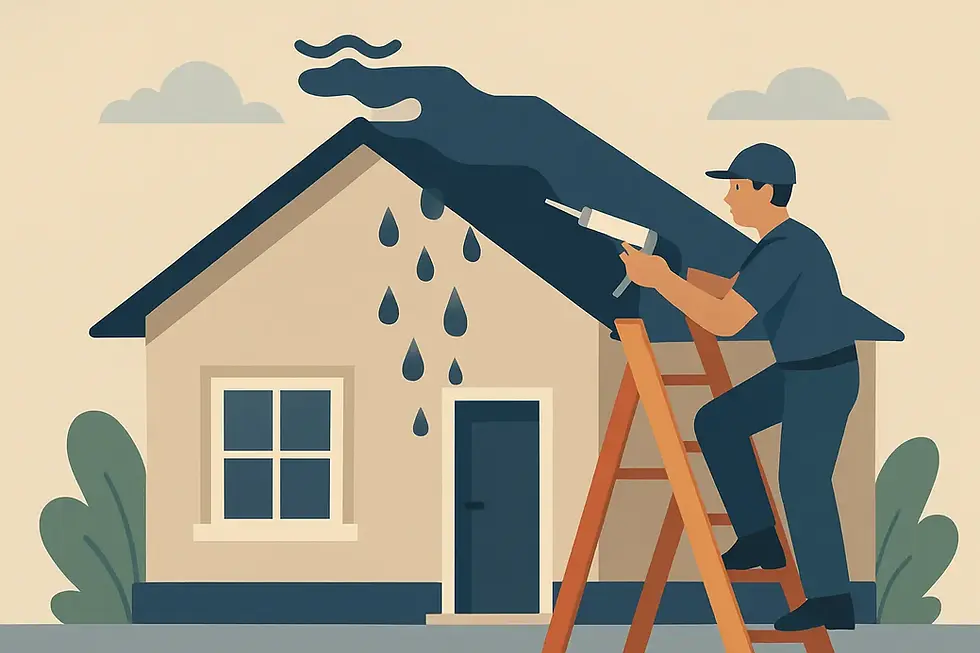
A leak rarely starts as a roofing debate. It starts as a ceiling stain spreading after rain, a tenant reporting a drip, or a wall that keeps drying out and getting wet again. That is why the real question behind roof coating vs roof replacement is not which option sounds better. It is which one actually stops the water intrusion for good.
Many property owners get pushed toward the wrong answer because the symptoms look bigger or smaller than they really are. A coating can be an excellent waterproofing solution in the right conditions. A replacement can also be the only responsible choice when the roof system is too far gone. The difference comes down to roof condition, leak source, substrate integrity, and whether you are fixing the problem or just covering evidence of it.
Roof coating vs roof replacement: what is the actual difference?
A roof coating is a fluid-applied waterproofing layer installed over an existing roof surface. Its job is to create a continuous barrier that resists water penetration, protects the substrate, and extends service life when the underlying roof is still structurally sound. Depending on the system, it can also seal minor cracks, bridge small surface movement, and improve UV resistance.
A roof replacement is a tear-off and rebuild of part or all of the roof assembly. That usually means removing failed materials, inspecting the deck, replacing damaged components, and installing a new roofing system from the base up.
The practical difference is simple. Coating preserves and protects an existing roof that still has life left. Replacement starts over because the current system no longer deserves to be saved.
When a roof coating makes sense
A coating is often the smarter choice when the roof is aging but not failing at its core. If the substrate is intact, the roof deck is dry, and the leaks are tied to surface-level waterproofing breakdown rather than widespread structural deterioration, a coating can be a cost-effective long-term solution.
This is especially true on flat or low-slope roofs where ponding, hairline cracks, failed seams, and weathered surfaces allow moisture to work its way in. In these cases, a properly specified coating system can stop active intrusion without the cost and disruption of a full replacement.
A good candidate for coating usually has issues like localized seepage, surface wear, UV damage, minor cracking, or aging waterproof layers that have lost elasticity. The key is that the roof has to be repairable first. Coatings are not magic. They perform best when the roof has been properly cleaned, repaired, detailed, and prepared before application.
For homeowners and property managers, this matters because a coating can reduce downtime, avoid major demolition, and preserve a usable roof system. When done correctly, it is not a shortcut. It is targeted restoration.
When roof replacement is the better call
Some roofs are beyond restoration. If water has been entering for a long time, the insulation is saturated, the deck is rotted, or multiple layers of past repairs have created a patchwork of weak points, coating over the top can trap problems instead of solving them.
Replacement becomes the better decision when the roof has widespread membrane failure, major substrate movement, severe blistering, soft spots underfoot, deep cracking, chronic leak patterns in multiple areas, or structural damage below the surface. In those cases, the leak you see inside is only the visible part of a larger failure.
This is where many owners lose money. They choose a coating because it costs less upfront, but the roof underneath is already compromised. The coating may slow water entry for a while, but it cannot restore rotten decking or reverse saturated insulation. That means paying once for the coating and again for the replacement that was eventually unavoidable.
The biggest mistake in roof coating vs roof replacement decisions
The biggest mistake is treating every leak as a roofing material problem. Often, the source is more specific than that.
Water can enter through failed flashing, parapet wall cracks, drain transitions, rooftop penetrations, balcony junctions, or exterior wall defects that mimic roof leaks. A property owner sees water at the ceiling and assumes the entire roof has failed. A contractor who does not specialize in leak diagnosis may quote a full replacement because it is broader, simpler to sell, or easier than tracing the real entry point.
That is why inspection matters more than assumptions. The decision should start with diagnosis, not product preference.
What a proper inspection should confirm
Before anyone recommends coating or replacement, they should be able to explain what is leaking, where water is entering, how far damage has spread, and whether the existing substrate can still hold a waterproofing system.
A credible inspection should look at visible roof wear, but also transitions, penetrations, drainage, ponding patterns, interior signs of migration, and adjacent wall conditions. Moisture does not always travel straight down. It can move laterally before showing up on a ceiling or wall, which is why surface appearance alone is not enough.
If the roof is a valid coating candidate, the inspection should confirm that repairs can restore continuity and that adhesion, slope, and substrate conditions support the proposed system. If it is not, you should hear a clear explanation of why replacement is necessary.
Cost matters, but cost alone is the wrong filter
Most people first compare coating and replacement by price. That is understandable. A coating usually costs significantly less than full replacement, and the installation is generally faster and less disruptive.
But the cheaper option is only cheaper if it works.
A coating on a sound roof can deliver strong value because it extends life and stops leaks without tearing off usable materials. A replacement on a failed roof can also deliver strong value because it removes hidden damage and resets the system properly. The expensive mistake is choosing based only on invoice size instead of roof condition.
If your roof still has structural integrity, replacement may be overkill. If your roof is saturated or deteriorated below the surface, coating may be false economy. The right decision protects the building and prevents repeat spending.
How long each option lasts
Service life depends on climate, roof type, workmanship, drainage, and maintenance. A professionally installed coating system can add meaningful life to an existing roof when used in the right conditions. It is not forever, but it can buy years of reliable waterproofing if the substrate was worth preserving to begin with.
A full replacement generally offers a longer reset because the assembly is rebuilt, not just resurfaced. But longer does not always mean smarter today. If the roof is still salvageable, replacing it prematurely means discarding serviceable materials and paying for a larger project than necessary.
This is where specialist judgment matters. You are not just buying years. You are buying the right years from the right solution.
Which option is less disruptive?
Coating is usually less disruptive. There is less tear-off, less debris, less noise, and often faster turnaround. For occupied homes and rental properties, that can be a major advantage. It also reduces exposure during the project because much of the existing roof remains in place.
Replacement is more invasive by nature. It may be necessary, but it brings a longer project timeline, more site activity, and more potential interruption for occupants.
If your property has active leaks but the roof is still restorable, coating can be the lower-disruption path to durable protection. If the system has failed at a deeper level, disruption is the price of doing the job correctly.
The right answer depends on the roof you actually have
There is no honest universal winner in roof coating vs roof replacement. The right choice depends on whether the existing roof is still a sound base for waterproofing.
If the roof is structurally solid and the problem is surface-level waterproofing failure, a coating can be the more efficient and financially responsible fix. If the roof has widespread internal damage, replacement is the safer and more permanent route.
That is why specialist leak diagnosis matters so much. At Invisisealworks, the goal is not to sell the biggest job. It is to identify the true point of failure and recommend the solution that stops water intrusion permanently, with the least unnecessary cost and disruption.
If you are deciding between coating and replacement, do not start with the product. Start with proof. Get the roof inspected, get the leak source identified, and make the decision that solves the building problem instead of just covering the symptom. The best roofing investment is the one you do not have to pay for twice.


Comments