
Roof Leak Repair vs Waterproof Coating

A ceiling stain rarely starts as a ceiling problem. By the time water shows up indoors, the real failure has often been developing on the roof for weeks or months. That is why the choice between roof leak repair vs waterproof coating matters so much. One option addresses a visible failure point. The other can create a broader protective barrier. The right answer depends on what is actually causing the leak, how far the moisture has traveled, and whether you want a quick fix or a long-term solution.
For homeowners, landlords, and property managers, this is where many repairs go wrong. A contractor spots one crack, seals one joint, and the leak seems gone. Then the next storm exposes the real issue - the roof system has multiple weak points, deteriorated substrate, failed seams, or widespread water entry around penetrations and edges. A patch can stop one symptom. It does not always stop the water intrusion pattern.
Roof leak repair vs waterproof coating: what is the real difference?
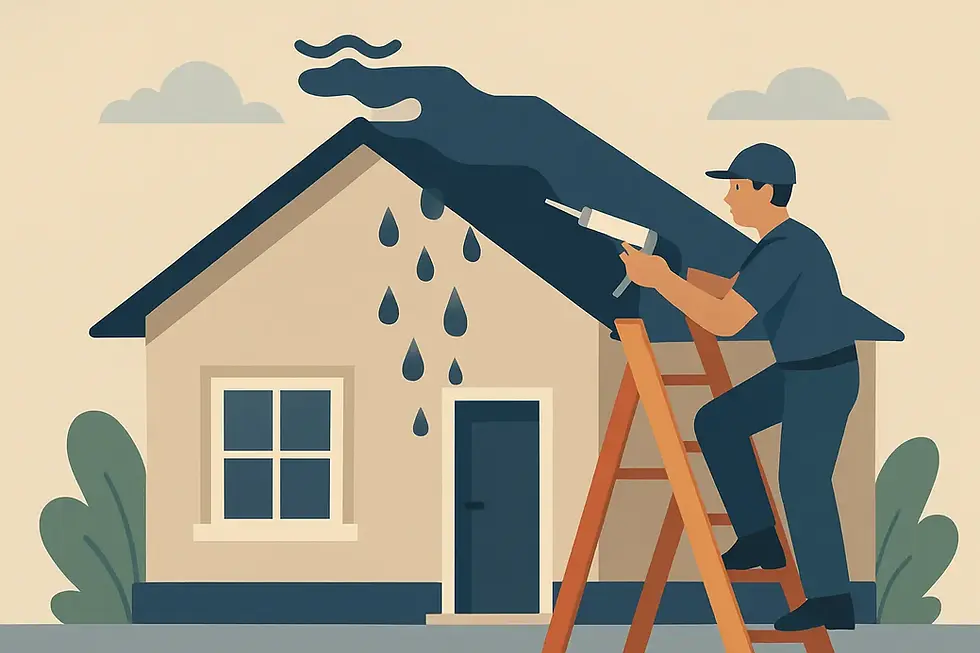
Roof leak repair is targeted. It focuses on a specific defect such as a crack, puncture, lifted flashing, open seam, failed joint, or damaged section around a vent, drain, skylight, or parapet. If the leak source is isolated and the surrounding roof is still in sound condition, this approach can be the fastest and most cost-effective path.
Waterproof coating is broader. It is applied across a wider roof area, or sometimes the full roof surface, to create a continuous moisture-resistant layer. A coating is not just cosmetic. When correctly specified and installed over a suitable surface, it helps protect against future water entry by sealing porous areas, reinforcing weak sections, and reducing the chance that small defects become interior leaks.
The key distinction is simple. Leak repair solves a point failure. Waterproof coating protects a system. If you only treat the spot where water appears, you may miss the network of pathways that allowed it to get there.
When roof leak repair is the right move
Not every roof needs a full coating system. In some cases, a direct repair is exactly the right call.
If the leak is recent, clearly traceable, and limited to one damaged area, a repair can be efficient and durable. This is common after storm damage, impact damage, localized flashing failure, or a newly opened seam near a roof penetration. When the rest of the roof remains structurally sound and the waterproofing layer is still performing, repairing that one failure point makes sense.
This approach also works when an inspection confirms the leak has not spread into multiple roof zones. A licensed specialist should be looking for more than the visible stain inside. They should assess ponding areas, surface wear, membrane condition, previous patch quality, edge details, and transitions where roofs meet walls.
A proper roof leak repair should not be a smear-and-go job. It should identify the entry point, correct the material failure, and confirm whether trapped moisture or adjacent weaknesses are present. If that deeper inspection does not happen, even a neat-looking repair can fail early.
When waterproof coating is the smarter investment
A waterproof coating becomes the better option when the roof is no longer failing in just one place. If you have recurring leaks, aging roof surfaces, widespread hairline cracking, porous substrate, multiple patch marks, or water intrusion around more than one penetration, you are likely dealing with a system-level problem.
This is especially common on flat or low-slope roofs, older concrete roofs, balconies over living spaces, and roof sections exposed to harsh sun, standing water, and thermal movement. In these situations, water often enters through several vulnerable areas at once. One patch may stop one pathway, but another opens as soon as the next heavy rain arrives.
A professionally applied waterproof coating can create continuity where the roof has become too vulnerable for isolated repairs alone. It helps bridge minor surface irregularities, protect exposed materials, and reduce repeat call-backs. For property owners who are tired of paying for the same leak twice, this shift from reactive repair to preventive waterproofing is often where the real savings begin.
That said, coating is not magic. If the roof has severe structural failure, saturated substrate, major delamination, or extensive material breakdown, coating over the problem is the wrong move. Good waterproofing starts with diagnosis, not product selection.
The biggest mistake: coating over an unresolved leak
This is where many people lose money. They assume a waterproof coating is a universal fix, apply it over a wet or failing surface, and expect the leak to disappear. If the roof has underlying cracks, failed joints, trapped moisture, or damaged transitions that were never properly treated, the coating may not bond correctly or perform as intended.
A coating system is only as strong as the preparation beneath it. Surface cleaning, crack treatment, joint detailing, substrate testing, and moisture assessment matter. So does choosing the right material for the roof type. Concrete, metal, modified bitumen, and previously coated surfaces do not all behave the same way.
If a contractor recommends coating without explaining the leak source, the roof condition, and the preparation process, that is a warning sign. Water intrusion is diagnostic work first and application work second.
How to decide between repair and coating
The practical question is not which option sounds better. It is which option matches the roof condition.
If the leak is isolated, the roof is otherwise healthy, and the defect can be clearly repaired, targeted leak repair is often enough. If the leak keeps returning, appears in different spots, or comes from an aging roof with multiple weak areas, coating may offer better long-term protection.
A few factors usually decide it. Roof age matters. So does the number of prior repairs. The type of roof matters, the amount of standing water matters, and the exact path the water is taking matters. Interior symptoms alone do not tell the full story. Water can travel far from the point of entry before it shows up on a ceiling or wall.
That is why inspection-led waterproofing is so important. A specialist should assess whether the problem is a single breach, a pattern of surface failure, or a hybrid case where repairs are needed first and coating follows as the protective system.
Roof leak repair vs waterproof coating: cost now vs cost later
A patch usually costs less upfront. That is the main reason many owners choose it first. And when the leak truly is isolated, that decision can be completely justified.
But the lowest initial cost is not always the lowest total cost. Repeat emergency visits, ceiling repairs, tenant complaints, mold risk, repainting, and damaged finishes can quickly erase any savings from choosing a minimal fix on a roof that needed broader treatment.
Waterproof coating generally requires more preparation and a larger scope, so the upfront investment is higher. The value comes from reducing recurring leaks and extending protection across the roof surface rather than gambling on one repaired point. For owners managing multiple units or trying to avoid recurring disruption, that predictability matters.
The smarter financial question is this: are you paying to stop this leak, or are you paying to stop roof leakage from becoming a repeat problem?
What a reliable contractor should tell you
A trustworthy waterproofing specialist should not force every roof into the same solution. They should explain whether the leak is isolated or systemic, whether the substrate is suitable for coating, and whether repairs must be completed before any coating is applied.
They should also be clear about expected lifespan, limitations, and warranty coverage. Confidence is good. Specificity is better. If a company can inspect quickly, review photos, identify probable failure zones, and outline a durable scope of work, that shortens the path to a real fix instead of another temporary patch.
This is the difference between general handyman thinking and specialist waterproofing. One reacts to the stain. The other tracks the water intrusion pattern and fixes the roof accordingly.
For many property owners, that is the moment the problem finally gets solved. A specialist approach does not just stop active leaks. It protects the building envelope, reduces repeat damage, and gives you a clearer standard of accountability. That is why companies such as Invisisealworks position waterproofing as a permanent resolution strategy, not a surface-level repair.
If your roof has leaked once, urgency matters. If it has leaked more than once, diagnosis matters even more. The right fix is the one that matches the real failure - not just the wet spot you can see today.


Comments